
I have been thinking a lot about the book that Kathy N. suggested "The Dangerous Act of
Loving Your Neighbor" and think it would be a great next step for us. Have a Merry Christmas
and Happy New Year gals!
Friday, December 23, 2011

Friday, December 9, 2011
Books to ponder
Last night we briefly discussed some possibilities of literature for our next study. Here is the beginning list of our brainstorming session. Please speak up, add to the list, discuss where you are in your journey so we can support each other honestly. As you look over this list and consider other books, keep in mind what Kathy suggested...we want to continue growing and stretching. I think about staying humble to our journeys, as we know this is God's most desired place for each of us.
I added a book too. Love to you all during this Christmas time!
The Dangerous Act of Love Your Neighbor by Mark Labberton
Love Wins by Rob Bell
The Return of the Prodigal Son by Henri Nouwen
The Fire of the Word: Finding God on Holy Ground by Chris Webber
The blog won't allow me to add a "core thought", so I have to add another book suggestion to this post. I can across another book that I'd like you to consider. We talk about 'unlearning' a lot in the group, and I often wonder if sometimes it's helpful to go back to some of the core learnings with a new set of eyes. This book doesn't hit the shelves until Jan 2012, but it sounds like he is diving into another way of looking at scripture. Check out the video and give some feedback.
I added a book too. Love to you all during this Christmas time!
The Dangerous Act of Love Your Neighbor by Mark Labberton
Love Wins by Rob Bell
The Return of the Prodigal Son by Henri Nouwen
The Fire of the Word: Finding God on Holy Ground by Chris Webber
The blog won't allow me to add a "core thought", so I have to add another book suggestion to this post. I can across another book that I'd like you to consider. We talk about 'unlearning' a lot in the group, and I often wonder if sometimes it's helpful to go back to some of the core learnings with a new set of eyes. This book doesn't hit the shelves until Jan 2012, but it sounds like he is diving into another way of looking at scripture. Check out the video and give some feedback.
Chris Webb, author of The Fire of the Word from InterVarsity Press on Vimeo.
Saturday, November 19, 2011
Leaving Your Church Blog Post
I really enjoyed reading this guest post and wanted to share. At the end of the article he gives some real life pointers that I nodded my head with:
http://rachelheldevans.com/david-nilsen-leaving-church
Jennifer
http://rachelheldevans.com/david-nilsen-leaving-church
Jennifer
Monday, November 14, 2011
Identity
Last Thursday evening we had another great discussion, during which I read another quote by Thomas Merton. I thought I would post at least part of it here, for those who were not able to be there: " . . .we are called to share with God the work of creating the truth of our identity. We can evade this responsiliby by playing with masks [a la The Apple], and this pleases us because it can appear at times to be a free and creative way of living. It is quite easy, it seems. to please everyone. But in the long run the cost and the sorrow come very high. To work out our own identity in God [ ] is a labor that requires sacrifice and anguish, risk and many tears. It demands close attention to reality at every moment, and great fidelity to God as He reveals Himself, obscurely, in the mystery of each new situation."
Powerful stuff, but easy to be blind to.
Powerful stuff, but easy to be blind to.
Monday, October 31, 2011
Thomas Merton
These words from thomas Merton seem to fit well with what we are studying with Richard Rohr's book, Falling Upward:
One thing above all is important: the "return to the Father."
The Son came into the world and died for us, rose and ascended to the Father; sent us His Spirit, that in Him and with Him we might return to the Father.
That we might pass clean out of the midst of all that is transitory and inconclusive: return to the Immense, the Primordial, the Source, the unknown, to Him Who loves and knows, to the Silent, to the Merciful, to the Holy, to Him Who is All.
To seek anything, to be concerned with anything but this is only madness and sickness, for this is the whole meaning and heart of all existence, and in this all the affairs of life, all the needs of the world and of men, take on their right significance: all point to this one great return to the Source.
All goals that are not ultimate, all "ends of the line" that we can see and plan as "ends," are simply absurd, because they do not even begin. The "return" is the end beyond all ends, and the beginning of beginnings.
To "return to the Father" is not to "go back" in time, to roll up the scroll of history, or to reverse anything. It is a going forward (a falling upward), a going beyond, for merely to retrace one's steps would be a vanity on top of vanity, a renewal of the same absurdity in reverse.
Our destiny is to go on beyond everything, to leave everything, to press forward to the End and find in the End our Beginning, the ever-new Beginning that has no end.
To obey Him on the way, in order to reach Him in who I have begun, who is the key and the end -- because He is the Beginning. (I read this as the Alpha and the Omega, the Beginning and the End, the I Am).
One thing above all is important: the "return to the Father."
The Son came into the world and died for us, rose and ascended to the Father; sent us His Spirit, that in Him and with Him we might return to the Father.
That we might pass clean out of the midst of all that is transitory and inconclusive: return to the Immense, the Primordial, the Source, the unknown, to Him Who loves and knows, to the Silent, to the Merciful, to the Holy, to Him Who is All.
To seek anything, to be concerned with anything but this is only madness and sickness, for this is the whole meaning and heart of all existence, and in this all the affairs of life, all the needs of the world and of men, take on their right significance: all point to this one great return to the Source.
All goals that are not ultimate, all "ends of the line" that we can see and plan as "ends," are simply absurd, because they do not even begin. The "return" is the end beyond all ends, and the beginning of beginnings.
To "return to the Father" is not to "go back" in time, to roll up the scroll of history, or to reverse anything. It is a going forward (a falling upward), a going beyond, for merely to retrace one's steps would be a vanity on top of vanity, a renewal of the same absurdity in reverse.
Our destiny is to go on beyond everything, to leave everything, to press forward to the End and find in the End our Beginning, the ever-new Beginning that has no end.
To obey Him on the way, in order to reach Him in who I have begun, who is the key and the end -- because He is the Beginning. (I read this as the Alpha and the Omega, the Beginning and the End, the I Am).
Wednesday, October 26, 2011
Beautiful Heartbreak - Hilary Weeks - Every Step
I came across this song. Oh, how it applies to our discussions about "What strips us?"
Friday, October 21, 2011
Continuing discussion . . .We had a great discussion last night. I sent out a group e-mail with a couple of comments, but thought I'd add a couple of things to the blog. One was that at a previous discussion the following question had been posed: "What needs stripping?" Last night there was an addendum added: "What strips me?"
Apropos to our blog discussion, here is a quote by Oswald Chambers: "God has a way of bringing in facts which upset a man's doctrines if these stand in the way of God getting at his soul." THAT is one thing that will bring one to the second half of life, i.s., the contents of the container. He paraphrases Jesus as saying (in Jn 5): "You search the Scriptures, for in them you think you hve eternal life; and these are they which testify of Me. But you are not willing to come to Me that you may have life." How true, how true, how sadly true . . .
Apropos to our blog discussion, here is a quote by Oswald Chambers: "God has a way of bringing in facts which upset a man's doctrines if these stand in the way of God getting at his soul." THAT is one thing that will bring one to the second half of life, i.s., the contents of the container. He paraphrases Jesus as saying (in Jn 5): "You search the Scriptures, for in them you think you hve eternal life; and these are they which testify of Me. But you are not willing to come to Me that you may have life." How true, how true, how sadly true . . .
Saturday, October 8, 2011
Unlearning Comment
Julies comments on forming a container early in life are so relevant to Kathy’s comments on risk and vulnerability. We cannot be very vulnerable or risk very much when we are wounded and unformed. At some point you need to form that container. You MAY have people around who help you , or you may be guided by your experience alone ( most commonly it is probably a combination of the two) . As you go through life and age, you definitely recognize people who have done it and those who have not done any of that work. I don’t think you even need to consciously know what it is your are doing when you are doing this type of work, but somehow we can recognize when someone is walking that walk. There is defiantly a spiritual component that happens, sometimes completely unbidden. There is definitely Mystery at this point. I think that Domestic Violence is one of THE most damaging crimes there is ( and one of THE most worthy causes to give to ) as children are so wide open and vulnerable, living with adults who have no container thus becoming unformed themselves, the endless cycle-but not without Hope.. . . What really is Mystery to me , and part of my own experience is that you can do this work, it can be sparked within you and brought to completion without even knowing what/who/how/ it is done. When God calls you he can find you ANYWHERE and renew you, change you heal you. Miraculous indeed! I also love that he can SEND you ANYWHERE he might need you to spread that change to others. MYSTERY = Powerful stuff.
Sunday, October 2, 2011
Unlearning
Hey gals...We talked a little about "unlearning" at last week's meeting. Kathy asked for specific examples of what we might be unlearning on our journeys. I've done some thinking about that one and was reminded about this quote by C.S. Lewis I came across a while back. It has changed my view of salvation and has definitely been part of my unlearning process. It may take you a few reads and a few days of processing to fully understand what he means here.
"We do know that no person can be saved except through Christ. We do NOT know that ONLY those who know Him can be saved by Him." ~C.S. Lewis
What does this mean to me? Well...I was brought up in a religious tradition which teaches that in order to be saved, one must say a certain prayer, a certain way, and in a certain context. And that salvation is a single point in time, not a process. This never resonated with me. If we are created uniquely and if our relationship with God is "personal", as we like to call it, then how can the salvation experience be the same for every person? It's been a mind-opening process for me. And I'm grateful for the lightness it brings.
How about you? Any thoughts on what you are unlearning?
Saturday, October 1, 2011
What a joy to meet again with all of you on Thursday night! We had a great discussion, and I look forward to many more, with sharing, questions, honesty.
Richard Rohr and this book will challenge you -- accept the challenge!!
Welcome to you who came for the first time. We're excited to have you join us!
I quoted from Curt Thompson's "The Anatomy of a Soul": "Knowledge does not quarantee goodness or courage or love. It certainly can support the emergence of those qualities, but in and of itself it does not produce them. Ultimately, then, knowledge alone does not satisfy. What does satisfy is being known. The process of being known is the vessel in which our lives are kneaded and molded, lanced and sutured, confronted and comforted, bringing God's new creation closer to its fullness in preparation for the return of the King. It is the communal container in which the information about the mind and relationships take its shape and gives birth to the graces of love, joy, peace, patience, . . ."
The verses to think about are Romans 12:2 and I Cor. 8:1-3.
"Think on these things!"
Richard Rohr and this book will challenge you -- accept the challenge!!
Welcome to you who came for the first time. We're excited to have you join us!
I quoted from Curt Thompson's "The Anatomy of a Soul": "Knowledge does not quarantee goodness or courage or love. It certainly can support the emergence of those qualities, but in and of itself it does not produce them. Ultimately, then, knowledge alone does not satisfy. What does satisfy is being known. The process of being known is the vessel in which our lives are kneaded and molded, lanced and sutured, confronted and comforted, bringing God's new creation closer to its fullness in preparation for the return of the King. It is the communal container in which the information about the mind and relationships take its shape and gives birth to the graces of love, joy, peace, patience, . . ."
The verses to think about are Romans 12:2 and I Cor. 8:1-3.
"Think on these things!"
Tuesday, September 20, 2011
Thursday, September 8, 2011
A blog post from Rachel Held Evans (author of Monkey Town)
The words out of my mouth after reading this post," how can I not post this?" I am still in awe of the Quakers silence in their worship meetings. I love the end quote in this post.....would love to hear your thoughts. I miss them......
Jennifer
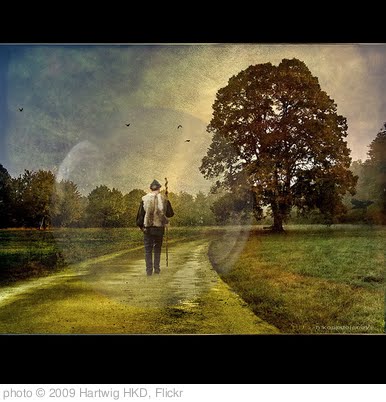
Jennifer
See Journeys of a Religious Misfit, Part 1: Wayside Shrines.
“When all my hopes in [the religious leaders] and in men were gone, so that I had nothing outwardly to help me, nor could I tell what to do, then, oh then, I heard a voice.” – George Fox
Quakers are pretty much the opposite of Catholics.
Or at least that’s what I thought when I first walked through the meetinghouse door to join the West Knoxville Society of Friends for First Day worship.
I found myself in a simple, unadorned room with three walls of windows opened to the surrounding woods. Folding chairs formed a small, two-row square around the room. There was no pulpit and no piano, just a group of about 20 people—some young, some old— sitting in silence, as if in meditation.
“Our chairs face each other because we all minister to each other,” the program for visitors said. “There are no prearranged prayers, readings, sermons, hymns, or musical orchestration because we wait for God’s leading and power in our lives.”
I had just returned from St. Bernard Abbey , where for three days I participated in fixed-hour prayer, attended mass, joined the faithful in chants and hymns , wandered an ornate sanctuary, lit candles before alters, murmured the Lord’s Prayer, repeated the Nicene Creed, dipped my fingers in holy water, crossed myself about a million times, and ate, slept, worked, and prayed beneath giant crucifixes that hung just about everywhere.
In contrast, the Quakers have no religious dogma, no creeds, no priests, no pastors, no liturgy, no religious imagery, no outward sacraments (no physical Baptism or Communion), no ritual, no set worship service. Instead, they spend most of their meetings in complete silence, meditating and awaiting internal illumination from the Inner Light.
And yet somehow my “week of silence” brought me to both of these places—curiously juxtaposed wayside shrines.
“Occasionally, during Meeting for Worship, someone is moved to speak out of the silence,” the program said. “Although Friends value spoken messages which come from the heart and are prompted by the Spirit of God, we also value the silence and find that expectant worship may bring profound leadings. Friends have found that some leadings are for sharing immediately, some for sharing on another occasion, and some are for our personal reflection.”
Having grown up evangelical, where folks feel “moved to speak” pretty much all the time, I guess I assumed this would be something like a Sunday night sharing time or open mic. But after 30 minutes of total silence, I realized these people were serious.
Of course my inner voice, (to be distinguished from the Inner Light), was having none of it.
I’m never going to get out of that parking space. Wait. Did I leave my lights on? I bet I did. Great. And no one can come in and say that there’s a turquoise Plymouth Acclaim in the parking lot with its lights on because that would interrupt the silence. Maybe I should go check…
Look at all the bare feet. Should I take my shoes off? Judith has her shoes on, but that guy who looks like a hippie has his off. Actually, most of these folks look like hippies. Why was I expecting Amish?
No communion, huh? That seems a little fishy to me. And no Baptism? Not sure I could jive with that. And whatever would I do without in-depth Bible studies and theological debate?
Oh gosh. I think someone just farted. Good thing I didn’t serve refried beans with the taco salad last night.
Okay, I need to focus on being quiet. Quiet, Rachel, quiet.
Should I close my eyes or keep them opened? What’s everyone else doing?
The Inner Light couldn’t get a word in edgewise.
Finally, a middle-aged gentlemen stood up and started to speak. In a thick East Tennessee accent he said, “At the football game Friday night, I couldn’t help but notice how many different kinds of people were there. There were elderly, being pushed in wheelchairs and helped along. There were mothers and fathers. There were tiny children, too young to walk. Everyone was talking and laughing and enjoying one another so much that I don’t think any of us were watching the action on the field. It was beautiful, and I thought to myself, ‘What a great game.’"
That was it. He immediately sat down, and we sat in silence for another 15 minutes or so before another woman stood up and shared the words of poet and Quaker John Greenleaf Whittier:
Drop Thy still dews of quietness,
Till all our strivings cease;
Take from our souls the strain and stress,
And let our ordered lives confess
The beauty of Thy peace.
By this point I had finally settled into the silence, using some tips I’d learned from the Benedictines about contemplative prayer. I felt my body relaxing and wave of refreshment and peace fell over me. In our frenetic, information-blitzed world, true quietness is like a drink of living water.
Accidental Fences
As we sat in silence together, I remembered something William James said: “Our lives are like islands in the sea, or like trees in the forest, which co-mingle their roots in the darkness underground. Just so, there is a continuum of cosmic consciousness, against which our individuality builds but accidental fences, and into which our several minds plunge as into a other sea or reservoir.”
It occurred to me that the distinctions between Catholics at Quakers that seem so pronounced on the outside are but accidental fences in the endless continuum of God’s grace. Perhaps my frantic search for a denominational “home” was an attempt to build fences where there needn’t be any.
That sounds a lot like Buddhism, my inner voice interrupted skeptically. Pull it together, Evans.
Only two people spoke in the span of an hour. So their words were, as the Quakers would say, weighty.
The service ended when one of the Friends extended his hand to another. Afterwards, I struck up a conversation with a sweet older lady named Mary and a young man about my age. I told them a little about my womanhood project and about my trip to St. Bernard.
“It’s been quite the contrast,” I said. “Two very different styles of worship.”
“Oh not that different!” Mary said eagerly. “We love the Benedictines and have quite a lot in common.”
She knew about the accidental fences.
When they asked about my religious background, I told them about my journey and how I didn’t seem to fit anywhere anymore.
“You’re looking for a home,” Mary said.
“EXACTLY!” I replied. “That’s what I am praying for.”
They were quiet for a few seconds before the young man said, “I spent quite a few years journeying through a variety of religious traditions, looking for a place to fit. But now I feel perfectly at home here with the Friends, in a Catholic mass, meditating with Buddhist, and even jumping around clapping my hands at the African American church down the street.” (He showed us a few of his dance moves.) “I feel at home because my home is inside of me. I’ve made a place in my heart for the Spirit, and it never leaves.”
On the drive home, I thought about these weighty words.
I think that ever since our church plant failed, I’ve been trying to recapture the sense of belonging…no, control… I had when I was such an integral part of creating our community’s identity. Now, when I visit other churches, all I can see are the fences—the doctrines, traditions, and idiosyncrasies that rub me the wrong way and make me feel isolated from my fellow Christians.
But the truth of the matter is, I can’t make my own tradition in my own image. I tried that, and it didn’t work. However, I can connect to the Holy Spirit and to the people with whom the Holy Spirit resides at every wayside shrine I encounter along the way. And I can cobble together an eclectic assemblage of favorite hymns, rituals, images, service efforts, and theology to adorn the little sanctuary in my soul.
The point of the Church has never been uniformity, but unity. Perhaps we honor it best when we joyfully refuse to conform to anything but the image of Christ, and when, without even knowing the final score at the end of the day, we can turn to one another and exclaim, “What a great game!”
Wednesday, August 24, 2011
From A Holy Experience Blog
when you’re broken
Christ comes to us in the only way any of us can recognize — with a body right broken.
Who of us isn’t busted?
On a Sunday, the pastor breaks the loaves, three of them, are broken right down the center.
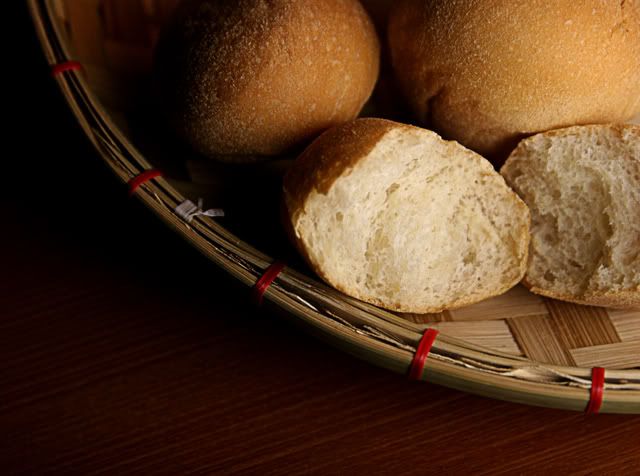


Lays them white faced on silver platters, then takes them in hand and turns to us the congregants — the farmers and grandmothers, the wives and the truck drivers — the beggars waiting to part lips and partake.
“This is my body, broken for you. Do this in remembrance of me.”
What if all we can remember is what a mess we are?
Young Christopher Eelman sits at the piano, his fingertips hardly brushing the ivories.
The platters pass from hand to hand, Maika Nagel leaning across her 4 kids to hand the torn bread down to Beryl Martin…
My mind forms the words that the piano notes weep.
And there it is too — who I am.
Needing one tall to quickly get into the kitchen this morning, to scrub up another ten potatoes for company coming and calling her name and hollering her name and glancing at the clock and just straight out screaming her name.
The way I snapped at her when she dawdled to the sink. Time running out and her running water, splashing it about, ignoring dirty spuds at the bottom of the sink, and the way I fumed disgust.
Sin had left a crimson stain. He washed it white as snow.
I look down at palms laying open in my lap. I hurt. Long after sin stains, it stings.
And when Joshua Hartung passes me the cold silver plate, I rip off a chunk. There’s no passing nice and neatly sliced and cubed bread. Every Sunday, the loaf goes from one stained hand to the next, and the starved have to do it in front of everyone: rip off a piece of bread. Because that is what I am — desperate and famished for the only Bread that can clean this filthy skin from the inside. We break bread – literally — because we’re messy and we’re torn and it’s my busted-up daily decisions that broke the body of God. A pulled apart piece of bread lies in my open hand.
The wheat died and crushed and placed in the furnace to rise again in the heat — it’s there in my hand and I lay the torn bread on the tongue, and sin within liquefies and I spill repentance. Is it possible that tears can soak stains? Many times the most sincere way to walk with Jesus is to say nothing with the lips, but bend the knee and weep the love.

The Farmer offers me the cup of the scarlet. I drink the warmth of His life laid down, and by faith and trembling hand, I believe the impossible: that my sullied hands and heart and lips are bleached by the salty blood of the hanging Lamb.
Sin-dyed hands can only be scrubbed clean by the One who died for our sins.
I can’t do anything and He can and does. I never get over this… the relief and the repentance.
I swallow the gospel right down. The good news: not that the good are rescued, (because what news would that be?), but the bad, the very bad, are loved, bought, redeemed. This is the thing: The only thing that fixes what’s broken is forgiveness.
And Charlie Heimstra and his sister Charlotte sing and we cleaned ones join, some still wet and wrung out:
Wash me in Your cleansing flow, now all I know…
Your forgiveness and embrace.
Singing, I raise my hand, the scrubbed one, towards His punctured one outstretched and His forgiveness is what never forsakes us.
Christopher plays the song slowly, the space of the sanctuary forgiving our busted tune, the notes breaking into a whole chorus …
Wherefore I say unto thee,
Her sins, which are many, are forgiven;
for she loved much.
Photo: “Forgiven Much” from artist Keith Johnson

Tuesday, August 23, 2011
I know the Bible too well | Elizabeth Esther
Here is a blogger I follow. This woman has an AMAZING story about how she was able to leave a legalistic church. Recently I came across this post and thought I would share. Just something to think about as we move into the next season of our group. Just click on the link below.
Love and miss you all during our break.
Julie
I know the Bible too well | Elizabeth Esther
Love and miss you all during our break.
Julie
I know the Bible too well | Elizabeth Esther
Friday, August 19, 2011
Interesting Site/Book
Thought I would share:
http://www.introvertedchurch.com/2011/05/parenting-as-spiritual-discipline.html
Click Here
http://www.introvertedchurch.com/2011/05/parenting-as-spiritual-discipline.html
Click Here
Thursday, August 18, 2011
Monday, July 11, 2011
Waiting to be shocked
So, I started reading Dira's copy of Love Wins (thanks girl!) and I am 87 pages in- a quick read and I am really interested. Anyway, I have to admit, I am waiting for the shock. The part where I drop my jaw and have to put down the book. Maybe it comes later, maybe I have read too many books that are out of the box, maybe their is no shock....
Have you read the book? Thoughts?
I am half way through the chapter about Hell.
D'Amato
Have you read the book? Thoughts?
I am half way through the chapter about Hell.
D'Amato
Wednesday, June 29, 2011
Sharing
I was watching Oprah's "behind the scenes" show last week and she said something that spoke to me. It made me think of you all....
"There is a difference between being broken and being broken open."
Thoughts? Does this speak to you?
Much Love,
Jennifer
Tuesday, June 21, 2011
Fro Rachel Held Evans.....she gets me.
Have you ever met someone who really hated Catholicism?—you know, a guy who will listen to any perspective but a Catholic perspective, join any group but a Catholic group, read any book but a Catholic book, and worship in any church but a Catholic Church?
There are many possible explanations for why such a person would hate Catholics, but one of the most plausible is that he used to be one.
Recently I’ve noticed that the religious traditions we tend to fight against the most are often the ones from which we came. I’ve seen this in my own life as my frustrations with the conservative evangelical culture in which I grew up cause me to dismiss its proponents with more anger and disdain than those of any other faith. I’ll listen intently to the perspective of a Catholic or a Greek Orthodox or a Buddhist or even an atheist, but the moment I hear James Dobson’s voice on the radio, I start yelling over it. It’s those conservative evangelicals that we’ve really got to watch out for, I tell myself. They’re the ones mixing the gospel with politics and reducing faith to an endless list of doctrinal statements.
Part of my reaction reflects a desire to reform my own tradition. I am more invested in evangelicalism than any other branch of Christianity, and so I am more emotionally attached to its successes and failures.
But my reaction also reflects a tendency to overcorrect.
Here’s what I mean: The worst grade I ever got in high school was in driver’s ed. (Let me assure you that this says more about my overachieving tendencies than my driving skills.) When I received my grade…and promptly burst into a fit of sobs…my instructor informed me that I had a bad habit of overcorrecting when I made a mistake. When told I was going too fast, I would slam on the breaks. When told I was veering to close to the center line, I’d nearly swerve off the road. When told I wasn’t checking the rearview mirror enough, I would take my eyes completely off the road.
“You have more time than you think to correct mistakes,” he offered gently. “Not everything’s an emergency.”
Those of us whose faith journeys have taken us from one tradition to another often struggle with overcorrecting. We can get so focused on what we don’t want to be that we lose track of who we do want to be. We rebel like angsty teenagers against anything that resembles our parents, our background or, worst of all, our old selves. And if we’re not careful, we’ll throw the best of these traditions out with the worst.
In fact, one could argue that some of the Church’s most notable movements and schisms have been triggered by overcorrections that take centuries to balance back out.
Maybe something shifted when I turned 30, but these days I’m a lot more interested in who I’m becoming than who I used to be. This means bringing the best of my conservative evangelical past into my future and remaining open to what my more conservative brothers and sisters still have to teach me. It means appreciating the sense of activism and commitment evangelicalism taught me, and nurturing that hunger for Scripture instilled in me at a young age. It means being quick to listen, slow to speak, and slow to anger. It means taking this journey one day at a time.
I have more time than I think to correct my mistakes.
Not everything’s an emergency.
***
Do you find yourself overcorrecting when it comes to the faith tradition with which you grew up? What valuable truths might you be leaving behind?
Wednesday, June 1, 2011
Unity/Community
Good afternoon ladies!
I had shared a few things during our last book study on a few things I learned at church a few weeks back that I thought were so appropriate to study. "Our unity reflects God's character but it also gets the attention of the world". "Unity does not need to be created, it simply needs to be protected" Max Lucado. Here are a couple of verses that went along with the sermon. I was going to make you all look them up, but I love you so much, I thought I would go ahead and type them :) John 13:35 "By this all men will know that you are my disciples, if you love one another." Phil 2:2 then make my joy complete by being like-minded, having the same love, being one in spirit and purpose. John 17:22-23 I have given them the glory that you gave me, that they may be one as we are one: I in them and you in me. May they be brought to complete unity to let the world know that you sent me and have loved them even as you have loved me. Eph 4:3 Make every effort to keep the unity of the Spirit through the bond of peace. Heb 11:1 Now faith is being sure of what we hope for and certain of what we do not see. John 10:16 I have other sheep that are not of this sheep pen. I must bring them also. They too will listen to my voice, and there shall be one flock and one shepherd. And the last one is John 17:20 My prayer is not for them al one. I pray also, for those who will believe in me through their message. Sorry so long, but I couldn't help myself. May God be with each one of you and bless you through out the summer. I lift you all up in prayer and I am blessed to know all of you. Thanks for the smiles, tears and talking and sharing God's word. Simply sharing :)
I had shared a few things during our last book study on a few things I learned at church a few weeks back that I thought were so appropriate to study. "Our unity reflects God's character but it also gets the attention of the world". "Unity does not need to be created, it simply needs to be protected" Max Lucado. Here are a couple of verses that went along with the sermon. I was going to make you all look them up, but I love you so much, I thought I would go ahead and type them :) John 13:35 "By this all men will know that you are my disciples, if you love one another." Phil 2:2 then make my joy complete by being like-minded, having the same love, being one in spirit and purpose. John 17:22-23 I have given them the glory that you gave me, that they may be one as we are one: I in them and you in me. May they be brought to complete unity to let the world know that you sent me and have loved them even as you have loved me. Eph 4:3 Make every effort to keep the unity of the Spirit through the bond of peace. Heb 11:1 Now faith is being sure of what we hope for and certain of what we do not see. John 10:16 I have other sheep that are not of this sheep pen. I must bring them also. They too will listen to my voice, and there shall be one flock and one shepherd. And the last one is John 17:20 My prayer is not for them al one. I pray also, for those who will believe in me through their message. Sorry so long, but I couldn't help myself. May God be with each one of you and bless you through out the summer. I lift you all up in prayer and I am blessed to know all of you. Thanks for the smiles, tears and talking and sharing God's word. Simply sharing :)
Tuesday, May 31, 2011
The Earth Is Crammed with Heaven
The earth is crammed with Heaven
And every common bush afire with God.
But only he who sees, takes off his shoes.
The rest sit around and pick blackberries.
~Elizabeth Barrett Browning~
And every common bush afire with God.
But only he who sees, takes off his shoes.
The rest sit around and pick blackberries.
~Elizabeth Barrett Browning~
Friday, May 27, 2011
Still thoughtful . . .
I have shared this before, as meditation...
Be still, and know that I am God.
.................
Be still and know that I am.
.................
Be still and know.
.............
Be still.
....
Be.
And a thought: "Wealth consists not in having great possessions but in having few wants." (Esther De Waal, Seeking God: The Way of St. Benedict.)
Be still, and know that I am God.
.................
Be still and know that I am.
.................
Be still and know.
.............
Be still.
....
Be.
And a thought: "Wealth consists not in having great possessions but in having few wants." (Esther De Waal, Seeking God: The Way of St. Benedict.)
Wednesday, May 25, 2011
Thoughts following the discussion last night: "Holy curiosity"
From the Christian Century: " [There was] a rabbi who, when approached by a member of his congregation who was rejoicing about something, would ask darkly, "How do you know it's not a disaster?" When someone would approach him with a lament, he would respond, "How do you know it's not a blessing?" [ ] the rabbi "called his pupils to look again, wihtout judgment, but with what I would call 'holy curiosity,' " which makes " us willing to live in the mystery of an unfolind story." This fits right in with our discussion about looking beyond, listening to God with an ear to leaving our preconceived notions behind us, and calls us again to accept and witness and wonder at the mystery of God in our lives an the universe.
Wednesday, May 4, 2011
Another repost
Another one from Jon Acuff.....I just loved it!
1008. The miserable god.
I once met a Tom Selleck impersonator at a party. It was a very surreal experience because at the time I was wearing a grass skirt and a t-shirt I had made with Magnum PI’s photo on it. (It was a Hawaiian Party, not just a “Jon does weird things” party. I promise.)
He had a thick Tom Selleck mustache, hair that would stay in place even while driving a Ferrari through the hills of Honolulu and he seemed like he probably had a friend with a helicopter. (Jersey Shore, Lady Gaga, Justin Bieber. Felt like I was going to lose some audience with those Magnum PI 1980s references.)
But he was a photo copy of someone else and it felt like there were two Tom Sellecks in the world at that exact moment. Tom Selleck had become multiple people and that’s something I’m afraid will happen to me. Not that I’ll have an impersonator, but rather that I’ll become an impersonation of myself. That there will be multiple me’s. The person I really am and the person I pretend to be on this blog.
There’s a great temptation when you blog about faith to act like you’ve got it all together. I’m not sure why, but I think you become afraid that if you say the wrong thing or express the wrong doubt, someone will comment or tweet, “I can’t believe he doesn’t understand that thing about God already! Every real Christian knows that!” When you give into that fear you become two people. Real you and blog you.
To avoid that, I want to tell you about something that happened to me on the day my new book Quitter
Two weeks ago, on a Monday morning, Quitter was finally available for pre-order. In the life of an author, that’s a big day because it’s the first chance to jump out into the world and say, “Here’s my book! Here’s this thing I wrote. I think it’s special. I hope you do too.” And then you wait to see if the world agrees.
I’m sure other folks are cool and calm on days like that. I’m sure there are people who read this site who have had big projects launch, big life changes like moving over seas or big adventures like taking a new job and have been at peace the entire time.
I am not like that.
I was a mess. And in my quiet time, as I prayed that morning, this is what went through my head,
“Maybe Quitter will fail so that God can teach you an important lesson.”
In the space before I had the chance to have another thought, I felt like God rushed in. It wasn’t audible, it wasn’t written on the wall. A bush did not catch ablaze, but in my heart this is what I felt:
Why can’t I teach you in the midst of joy? In what better way could I reveal the heart of who I am, goodness, then in the midst of something good? You believe I can only teach you in the midst of great hardship and hurt. But failure is not my only laboratory. Does not a father learn something profound about my miraculous goodness when he holds his newborn baby for the first time after delivery? Does not a bride not see my glory when she walks down the aisle toward her groom? Life and lessons cannot be limited to heartache.
This is what I am wrestling with right now, the continued realization that I’ve made God into an emo god. I know how to cry with him, but not laugh. I know how to mourn with him but not dance. And I think the enemy wants that. He wants us to be ashamed or embarrassed by the great ways God blesses us and reject compliments and think that God can only hold us and mold us in times of great hurt.
But when we do that, we miss who God is.
That he is the God who loves us so much he sent his son to die for us.
That he is the God who longs to be gracious to us and rises in the morning to show us compassion. (Isaiah 30:18) That he is the God who satisfies our desires with good things. (Psalm 103:5) That he is the God who delights in the well-being of his servant. (Psalm 35:27)
Does God teach us in difficult moments? Have we not been promised that in this world there will be trouble? Without a doubt.
But when we confine God’s love and lessons strictly to a classroom of misery we create a miserable god.
And that’s not who he is.
Wednesday, April 27, 2011
Something from Jon Acuff
I am not sure if you have heard of Jon Acuff, Author of Stuff Christians Like, but I have been reading his blog for a bit now. Today's post was great and you, my sisters, came to mind to share it.
Sometimes, hope hurts.
It shouldn’t. The phrase, “hope hurts” should be an oxymoron like “Lil Wayne gospel album.” But I promise you, it’s not.
Sometimes when you’re so deep in a season of hurt, you get used to the bad. You start to think you deserve it. You start to expect it and get comfortable with it and get numb to it. And like a creature that lives so far down on the bottom of the sea, you adapt to it. You cobble together little survival mechanisms that help you get through. You get by.
But hope is tenacious …
Even in the darkest of my days, when I’d journal about suicide and despair, a fragment of hope still bounced about softly in the dryer of my head. (When you’re married with kids and have lots of laundry to do, 42% of your metaphors and analogies become housework flavored.)
There was a problem though, there was a painful obstacle between me and hope. You see, I was so far down the path of hopelessness, I was so lost and selfish and bent on destruction that I found myself in a terrible lose-lose situation. For example: If people were kind to me, I felt scared because I believed the lie that if they really knew me they wouldn’t be kind to me and would be horrified at who I really am. If people were mean to me, I felt hurt because they had been mean to me. Any way I turned simply resulted in more fear and more hurt.
And that is one of sin’s goals. Not simply to remove the good from your life, but to have it actually serve as a weapon of mass destruction.
Have you ever felt that way?
Have you ever felt completely unworthy when someone offers you love?
Have you ever been ashamed of the lies you’re living when someone offers you truth?
Have you ever felt undeserving of something good, because deep down, you believed that person wouldn’t really love you if they knew who you were?
It’s very possible that I’m the only one, and that’s OK. But I do need to tell you about the 9 words in the Bible that changed the way hope felt for me. And they’re 9 words you probably missed last weekend during Easter just like I did for so many years. Which is why I remixed this post.
I’ve written about this before, but I’m a big fan of “edge verses.” I’m a big fan of looking on the periphery of a scene in the Bible and seeing all the deep truth that often gets hidden amidst a major scene. And in Luke 22 that certainly happens.
Jesus is on the threshold of getting crucified. He has the last supper with his disciples. He is sharing his thoughts on the father and the concept of serving and ruling. There is a sense of great importance heavy in the air. In the middle of that, he has a short conversation with Simon about how he is going to betray him.
It’s going to happen. Jesus knows this, but he wishes it wasn’t. He says to Simon in Luke 22:31-32:
“Simon, Simon, Satan has asked to sift you as wheat. But I have prayed for you, Simon, that your faith may not fail.”
And then, in 9 words, he explains a big part of the reason I thought a mess-up like me ever had a chance at being a Christian.
Jesus tells Simon:
“And when you have turned back, strengthen your brothers.”
That’s it, those are 9 really simple words, but they demand a second look.
Do you see what Jesus is saying in that first half of the sentence, “And when you have turned back?” He’s saying:
And when you fail.
And when you sin.
And when you blow it and sell me out like a common thief.
And when you literally and physically turn your back on me.
And when you ruin it all.
When you turn back.
That concept is part of why our God is so different than everything we expect. We can turn back. There’s a return. There’s a comeback. There’s a loss and a brokenness and a state of falling, but you can turn back. That door is open. When I read the phrase “And when you have turned back,” I read a loud, wild picture of what grace really looks like.
Then you get to the part that is so easy to miss, the comma. Thank God for the comma, because that’s not how I would have written that sentence.
Mine would have looked more like:
“And when you have turned back, repent for three years before you try to get within a mile of my holiness.”
“And when you have turned back, don’t think for a second you’re qualified to tell other people about me.”
“And when you have turned back, here’s a long list of works you’ll need to do in order to clean yourself of the mistakes you’ve made and the consequences you’ve earned.”
But Christ doesn’t do that! He throws in a comma. He continues the sentence and simply says, “strengthen your brothers.”
Six years ago I ruined my life, but you know what?
God gave me the gift of the comma.
And that’s why I write Stuff Christians Like.
I have turned back. Not once, not twice, but a million times. And now it’s time to strengthen my brothers.
I don’t know what Easter was like for you last weekend, but I hope you didn’t miss the comma because God wants to give it to you. He wants to give you grace. He wants you to know that when you have turned back, you can still strengthen your brothers.
It’s time to accept the comma of grace.
Thursday, April 21, 2011
Maundy Thursday
I am sharing this week as we move closer to Easter. Here I share an excerpt from Henri Nouwen. And, tonight, as I eat 'supper' with my family, I will pray to be shown how I can bend over "to the ground and touch the places in each other that most need washing". Love you all!
Show Me the Way: Daily Lenten Readings by Henri Nouwen
Show Me the Way: Daily Lenten Readings by Henri Nouwen
“Just before entering on the road of his passion he washed the feet of his disciples and offered them his body and blood as food and drink. These two acts belong together. They are both an expression of God’s determination to show us the fullness of his love. . . . What is astonishing is that upon both occasions Jesus commands us to do the same. . . . He calls us to a total self-giving. He does not want us to keep anything for ourselves. Rather he wants our love to be as full, as radical, and as complete as his own. He wants us to bend ourselves to the ground and touch the places in each other that most need washing. He wants us to say to each other, ‘Eat and drink of me.’ By this complete mutual nurturing, he wants us to become one body and one spirit, united by the love of God. . . .”
Wednesday, April 20, 2011
Jesus
If you've ever had doubts about your faith, trust issues with God, worries about Who and how God really cares and works, then you may relate to this particular excerpt. I wanted to post it as we are in the midst of Holy Week and are focused on Jesus.
This particular excerpt comes from Rachel Evans, author of Evolving In Monkey Town.
"The most startling thing I noticed as I grew more acquainted with the Gospels was that Jesus had a very different view of faith than the one to which I was accustomed. I’m not sure when it happened, but sometime in my late teens or early twenties, it was as if Jesus packed his bags and moved from my heart into my head. He became an idea, a sort of theological mechanism by which salvation was attained. I described him in terms of atonement, logos, the object of my faith, and absolute truth. He was something I agreed to, not someone I followed…
This particular excerpt comes from Rachel Evans, author of Evolving In Monkey Town.
"The most startling thing I noticed as I grew more acquainted with the Gospels was that Jesus had a very different view of faith than the one to which I was accustomed. I’m not sure when it happened, but sometime in my late teens or early twenties, it was as if Jesus packed his bags and moved from my heart into my head. He became an idea, a sort of theological mechanism by which salvation was attained. I described him in terms of atonement, logos, the object of my faith, and absolute truth. He was something I agreed to, not someone I followed…
But Jesus rarely framed discipleship in terms of intellectual assent to a set of propositional statements. He didn’t walk new converts down the Romans Road or ask Peter to draft a doctrinal statement before giving him the keys to the kingdom. His method of evangelism varied from person to person and generally involved a dramatic change of lifestyle rather than a simple change of mind. To Jesus, “by faith alone” did not mean “by belief alone.” To Jesus, faith was invariably linked to obedience…
...Needless to say, that was a strange summer. It wasn’t the summer that brought an end to my doubt, but it was the summer I encountered a different Jesus, a Jesus who requires more from me than intellectual assent and emotional allegiance; a Jesus who associated with sinners and infuriated the religious; a Jesus who broke the rules and refused to cast the first stone; a Jesus who gravitated toward sick people and crazy people, homeless people and hopeless people; a Jesus who preferred story to exposition and metaphor to syllogism; a Jesus who answered questions with more questions, and demands for proof with demands for faith…a Jesus who healed each person differently and saved each person differently; a Jesus who had no list of beliefs to check off, no doctrinal statements to sign, no surefire way to tell who was “in” and who was “out”; a Jesus who loved after being betrayed, healed after being hurt, and forgave while being nailed to a tree; a Jesus who asked his disciples to do the same…
It occurred to me that if my faith managed to survive all of these doubts then this radical rabbi, this God in sandals, would require more from me than ever before. This radical Jesus wanted to live not only in my heart and in my head but also in my hands, as I fed the hungry, reached out to my enemies, healed the sick, and comforted the lonely. Being a Christian, it seemed, isn’t about agreeing to a certain way; it is about embodying a certain way. It is about living as an incarnation of Jesus, as Jesus lived as an incarnation of God. It is about being Jesus…in tennis shoes"
Saturday, April 16, 2011

A Palm Sunday Meditation: Take Up My Cross?
by Rev. James Martin, S.J.
Palm Sunday raises at least two important spiritual questions for Christians: What does it mean to be like Jesus? And what does it mean to take up our crosses, just like he did?
First, you don't need to go looking for your cross. Life gives them to you. Whether it's an illness or a tough family relationship or trouble in school or problems on the job. The real cross is the one that you don't want.
Because it's hardly a cross if you want it.
Just like it was for Jesus.
Second, we are asked by Jesus to accept our crosses.
Now, what does that mean? Well, first it means accepting that suffering is a reality in your life, and being honest about it. Perhaps more importantly, it means not passing along the bitterness that you feel. That doesn't mean that when you're with friends or family members or counselors, you can't talk about it or complain about it or even cry about it. That's both healthy and natural.
But it does mean that if you're angry about your boss or about school or about your family, you don't pass along that anger or bitterness or meanness to others. If you have a lousy boss, does that mean that you should be mean to your family? If you have a difficult family situation, does that mean that you should be angry with your coworkers? If you are having problems at school, does that mean that you should be cruel to your family?
Your cross is your cross. It shouldn't become someone else's.
Third, wait for the resurrection. Because in every cross there will be some invitation to new life, to a new way of relating to God, and often in a way that may not be immediately apparent.
In other words, where is the new life that God is holding out for you? And how will it come? Is it in forgiving someone in your family? Moving away from an unhealthy work environment? Letting go of something that prevented you from being more loving? Trusting in yourself a little more?
Surrendering yourself to the future that God has in store for you?
God's gift of resurrection is usually a complete surprise, just like it was for the Apostles. And just as the Apostles discovered on Easter Sunday, the resurrection does not come when you expect it. It sometimes takes a long time to come at all.
And when it does come, it's often not what you would expect it to look like.
Most of all, it's often hard to describe, because it's personal -- it's your resurrection.
When I was a Jesuit novice, I worked in a hospital for seriously ill people, and every Friday we had a little discussion group. One young woman, who had been in a wheelchair for many years told me something that completely surprised me. She said that she used to think of her chair as a cross -- which would have been my reaction -- but lately, she said, she thought of it as her resurrection.
She said, "My wheelchair helps me get around. Without it, I wouldn't be able to do anything. It brings me life."
Despite our crosses, or maybe because of them, these resurrections in our lives do come. You have Jesus's word on that.
James Martin, SJ, is a Jesuit priest, culture editor of America and author of 'The Jesuit Guide to (Almost) Everything and My Life with the Saints.'
Thursday, April 14, 2011
Grace
We briefly talked about Grace at our last meeting and I got the privilege of reading from Manning's book. Then, I can across the lyrics of this song we used to play on our page. I turned it back on. Here is the complete song by U2:
Grace
She takes the blame
She covers the shame
Removes the stain
It could be her name
Grace
It's a name for a girl
It's also a thought that changed the world
And when she walks on the street
You can hear the strings
Grace finds goodness in everything
Grace, she's got the walk
Not on a ramp or on chalk
She's got the time to talk
She travels outside of karma
She travels outside of karma
When she goes to work
You can hear her strings
Grace finds beauty in everything
Grace, she carries a world on her hips
No champagne flute for her lips
No twirls or skips between her fingertips
She carries a pearl in perfect condition
What once was hurt
What once was friction
What left a mark
No longer stings
Because grace makes beauty
Out of ugly things
Grace makes beauty out of ugly thing
-U2
Grace
She takes the blame
She covers the shame
Removes the stain
It could be her name
Grace
It's a name for a girl
It's also a thought that changed the world
And when she walks on the street
You can hear the strings
Grace finds goodness in everything
Grace, she's got the walk
Not on a ramp or on chalk
She's got the time to talk
She travels outside of karma
She travels outside of karma
When she goes to work
You can hear her strings
Grace finds beauty in everything
Grace, she carries a world on her hips
No champagne flute for her lips
No twirls or skips between her fingertips
She carries a pearl in perfect condition
What once was hurt
What once was friction
What left a mark
No longer stings
Because grace makes beauty
Out of ugly things
Grace makes beauty out of ugly thing
-U2
Thursday, March 17, 2011
Spiritual food
We really hit deep waters last Tuesday. Somehow, I feel our spiritual 'core' muscles getting stronger and stronger.
Here are some of the readings from Life Together by Dietrich Bonhoeffer we discussed.
"Human love binds, spiritual love serves"
"It is better to talk to Christ about a brother than it is to talk to a brother about Christ."
"In spiritual love, Jesus Christ stands between the lover and the one being loved."
Dallas Willard quote - "Transformation of life involves an inward journey of devotion and an outward journey of loving others concretely."
Philippians 3:10-16
Here are some of the readings from Life Together by Dietrich Bonhoeffer we discussed.
"Human love binds, spiritual love serves"
"It is better to talk to Christ about a brother than it is to talk to a brother about Christ."
"In spiritual love, Jesus Christ stands between the lover and the one being loved."
Dallas Willard quote - "Transformation of life involves an inward journey of devotion and an outward journey of loving others concretely."
Philippians 3:10-16
Wednesday, March 2, 2011
Returning
Here is the poem Kathy shared last night.....to think what has happened in my life since writing this almost a year ago. WOW!
Returning
I want to be compassionate not comparative
I want to be forgiving not bitter
I want to open my arms not walk away
I want to embrace not judge
I want to be full of joy not cynical
I want to be love not fear
I want to have more of Him not less of me
April 26, 2010
Sunday, February 27, 2011
Ally's Question to Dad, "Why are we here on earth?"
I couldn't resist sharing this with all of you. It's just a little something to laugh at. :)
Wednesday, February 16, 2011
Going solo. | Stuff Christians Like – Jon Acuff
What an awesome discussion last night!!! I have to say, for me, it was as if God just stopped the clock so that we could get it all "worked out". HEART is the only word I come up with to describe our dynamic last night, even though it's a noun. I am going to us it as an adjective. Heart. We poured out hearts out...thanks, my friends. That was better than a Hallelujah!
We talked so much about community, walking with God (Footprints in the Sand), worship, Person (with a capital P), relationship. I read Jon Acuff's blog quite often and thought I'd share today's. Going Solo...
Love you dearly,
Julie
Going solo. | Stuff Christians Like – Jon Acuff
We talked so much about community, walking with God (Footprints in the Sand), worship, Person (with a capital P), relationship. I read Jon Acuff's blog quite often and thought I'd share today's. Going Solo...
Love you dearly,
Julie
Going solo. | Stuff Christians Like – Jon Acuff
Sunday, February 6, 2011
Wednesday, February 2, 2011
Quotes from "Life Together" by Dietrich Bonhoeffer
"Innumerable times a whole Christian community has broken down because it had sprung from a wish dream. The serious Christian, set down for the first time in a Christian community, is likely to bring with him a very definite idea of what Christian life together should be and try to realize it. But God's grace speedily shatters such dreams. Just as surely as God desires to lead us to a knowledge of genuine Christian fellowship, so surely must we be overwhelmed by a great disillusionment with others, with Christians in general, and, if we are fortunate, with ourselves.
By sheer grace God will not permit us to live even for a brief period in a dream world. He does not abandon us to those rapturous experiences and lofty moods that come over us like a dream. God is not a God of the emotions but the God of truth. Only that fellowship which faces such disillusionment, with all its unhappy and ugly aspects, begins to be what it should be in God's sight, begins to grasp in faith the promise that is given to it. The sooner this shock of disillusionment come to an individual and to a community the better for both. A community which cannot bear and cannot survive such a crisis, which insists upon keeping its illusion when it should be shattered, permanently loses in that moment the promise of Christian community. Sooner or later it will collapse. Every human wish dream that is injected into the Christian community is a hindrance to genuine community and must be banished if genuine community is to survive. He who loves his dream of a community more than the Christian community itself becomes a destroyer of the latter, even though his personal intentions may be ever so honest and earnest and sacrificial.
God hates visionary dreaming; it makes the dream proud and pretentious. The man who fashions a visionary ideal of community demands that it be realized by God, others and by himself."
"Let him who cannot be alone beware of being in community, and let him who cannot be in community beware of being alone."
Subscribe to:
Posts (Atom)


.jpg)